

A materials R&D team rarely stores its most valuable knowledge in one place. A formulation may begin in a spreadsheet, gain context in an electronic laboratory notebook, connect to test results in a local file share, and later move into a cloud analytics environment. Each system may have its own users, permissions, and audit trail. When a departing researcher exports experimental results to a personal location, the security team may discover the event only after the data has crossed several boundaries.
That situation exposes the central challenge of enterprise data security. The problem isn't only stopping attackers at the network edge. It's knowing where sensitive data lives, who can use it, what they can do with it, how it moves through hybrid environments, and whether an AI workflow can access it without exposing intellectual property. This guide builds from foundational principles to risk models, architecture patterns, compliance decisions, R&D IP protection, and secure AI-native workflows.
Table of Contents
- Protect the data itself
- Control identity and permissions
- Observe activity and preserve evidence
- Build lineage into the workflow
Introduction to Enterprise Data Security Challenges
A researcher may start with an experiment in an ELN, send results through a supplier portal, discuss them in a collaboration tool, and ask an AI service to compare related findings. Each handoff creates a new access decision. Traditional perimeter security, which separates a trusted interior from an untrusted exterior, cannot govern that workflow by itself.
Modern materials R&D combines cloud applications, local instruments, shared repositories, and external contributors. Contractors may need access to one project, suppliers to selected results, and AI services to specific experimental data. The security problem is therefore less like guarding one building and more like controlling passage between connected laboratories, with different rules for each door.
The financial consequences make this a business concern. An IBM report, as summarized by No Jitter's coverage of IBM breach-cost reporting, reported a global average cost of a data breach at USD 4.88 million in 2024, compared with USD 4.45 million in 2023, a 10% year-over-year increase. The summary also reported an average cost of USD 5.17 million for breaches involving data stored in public clouds. Distributed customer information, regulated records, and proprietary formulations can turn weak controls into direct business exposure.
Start with five practical questions:
- What data matters most? Classify formulas, process parameters, customer records, test results, and routine operational files.
- Where does it reside? Map spreadsheets, ELNs, databases, SaaS applications, instruments, and backups.
- Who needs access? Tie permissions to role, project, experiment, device, and business purpose.
- What could go wrong? Review stolen credentials, accidental sharing, insider misuse, vulnerable services, and unsafe AI connections.
- How will the organization prove control? Maintain policies, audit trails, lineage, monitoring, and repeatable reviews.
These answers give Polymerize and the security team a shared operating map. Risk models can rank investment, architecture patterns can apply layered safeguards, and compliance controls can define evidence. R&D practices then protect IP while preserving collaboration, including AI-native analysis with governed access and traceable results.
Understanding Data Security Foundations
Enterprise data security has moved from protecting files with encryption toward managing risk across people, systems, workflows, and business decisions. NIST's cybersecurity milestone history records 1977 as the year associated with the first Data Encryption Standard and 2014 as the year it introduced the NIST Cybersecurity Framework, marking a shift toward a common process for identifying, protecting, detecting, responding to, and recovering from incidents. The historical development is documented in IBM's NIST cybersecurity milestone reference.
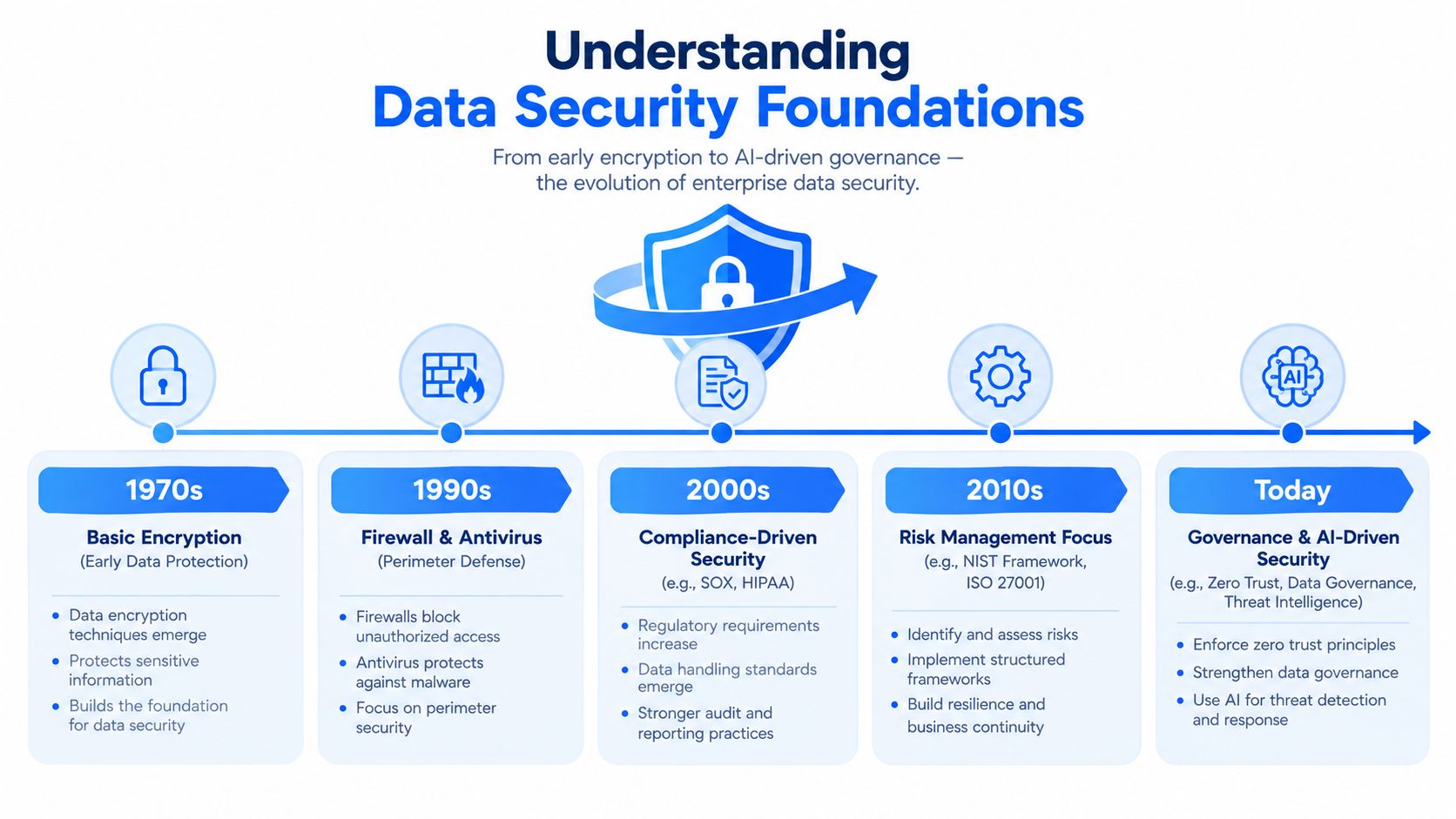
For an R&D organization, that evolution matters because encryption alone can't answer operational questions. It can protect a file at rest, but it doesn't determine whether a process engineer should see an unpublished formulation, whether a supplier can download raw test data, or whether an AI model should use confidential experiments for training or inference.
The CIA triad in a laboratory
The CIA triad, confidentiality, integrity, and availability, provides a simple language for evaluating those decisions.
- Confidentiality means limiting access to authorized people and systems. A new polymer formulation may be visible to the assigned project team but hidden from unrelated business units and external collaborators.
- Integrity means preserving accuracy and trustworthiness. Experimental records need change history, controlled approvals, and traceability so that scientists can distinguish original observations from later corrections.
- Availability means keeping data usable when authorized teams need it. A production transfer, safety review, or urgent experiment can fail if critical results are trapped in an unavailable system.
These pillars interact. Excessively broad access weakens confidentiality. Poor version control threatens integrity. Overly restrictive controls can undermine availability and encourage scientists to create shadow copies in less secure locations. Effective enterprise data security balances all three rather than maximizing one in isolation.
Practical rule: Treat each dataset as both a scientific asset and a business dependency. Its value depends on secrecy, reliability, and timely access.
Exploring Security Risk Models
A security risk model helps an R&D leader decide which problem deserves attention first. Consider a formulation record used by scientists, a supplier, and an AI service. The record may face credential theft, accidental export, a vulnerable web service, or unauthorized processing by a third-party tool. Excessive permissions, missing classification, unpatched systems, weak identity controls, and incomplete monitoring increase the exposure.
Two complementary methods make these conditions easier to compare.
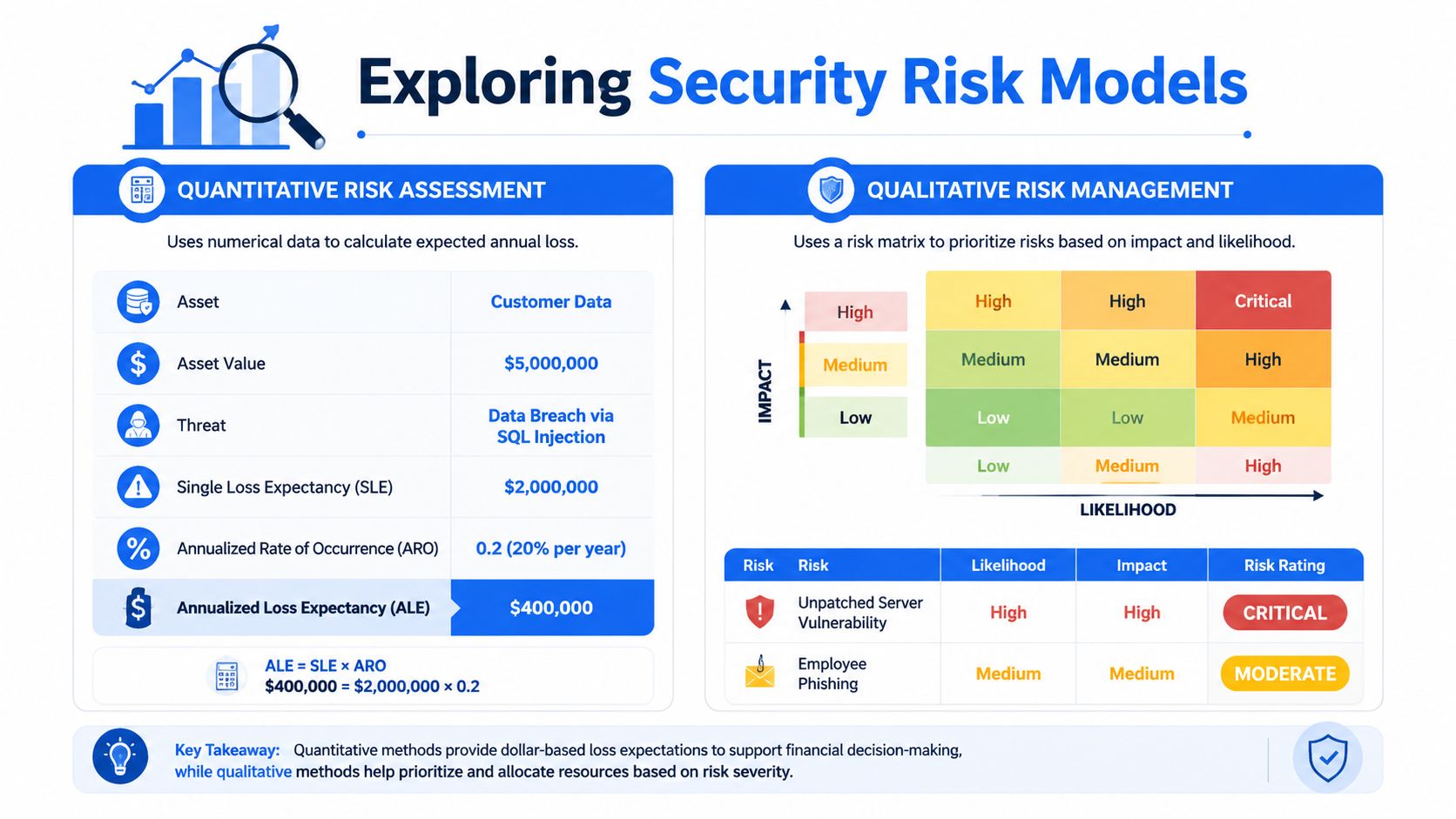
Quantitative assessment
A quantitative risk assessment expresses exposure through financial estimates. The team identifies an asset, estimates the loss from one damaging event, estimates how often that event might occur, and calculates an expected annual loss. For example, leaders could model the commercial effect of losing customer data or delaying a scale-up after an incident.
This method gives security and finance a shared basis for investment decisions. It can compare stronger access controls with potential investigation costs, downtime, lost business, remediation, and contractual consequences. The estimates will not be perfectly precise for unique R&D IP, but documenting assumptions makes them visible, testable, and easier to revise.
Qualitative management
A qualitative risk assessment ranks likelihood and impact with categories such as low, medium, high, or critical. A server vulnerability rated high for both likelihood and impact may require immediate treatment. A moderate phishing risk may call for training, stronger email controls, and monitoring, without requiring the same response as an active compromise.
Qualitative analysis fits situations where financial loss is difficult to estimate. The value of a breakthrough formulation may depend on market timing, patent strategy, customer commitments, and competitor knowledge. Those factors matter, even when they cannot be reduced reliably to one figure.
Use both models together
The two methods answer different questions. Quantitative analysis asks, “What financial exposure might this scenario create?” Qualitative analysis asks, “Which risks deserve attention first, given our knowledge and constraints?” Used together, they connect executive funding decisions with the daily choices made in an AI-native R&D workflow.
IBM's 2024 report provides a benchmark for financial exposure. The global average breach cost was USD 4.88 million, while public-cloud data breaches averaged USD 5.17 million, according to the 2024 Cost of a Data Breach Report. The report also found that 40% of incidents involved data spread across multiple environments, which can make investigation and containment more difficult.
For Polymerize or a similar platform, map the model to the actual R&D flow:
- Identify the dataset and business owner.
- Record where it lives and how it moves.
- List credible threats and known control gaps.
- Rate likelihood and impact qualitatively.
- Add a financial scenario where the estimate is defensible.
- Assign an owner, treatment plan, and review date.
This register connects laboratory behavior, cloud and AI processing, and enterprise prioritization in one reviewable record.
Implementing Security Architecture Patterns
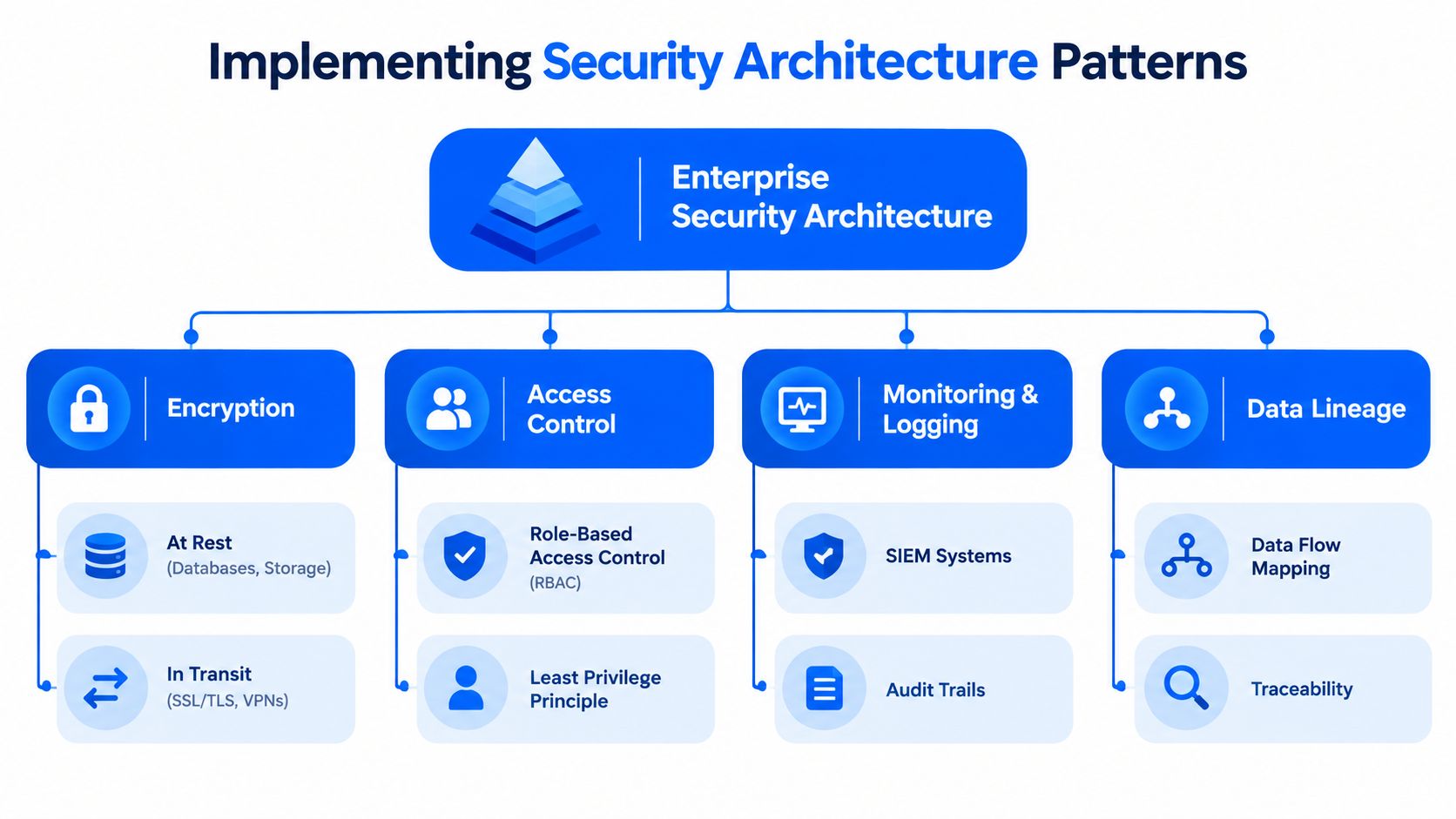
A secure R&D data estate needs layers, not a single protective product. The layers should work together across on-premises systems, cloud storage, SaaS applications, instruments, and AI services. The key is to assign each control a clear job and connect its evidence to the next control.
Protect the data itself
Encryption at rest protects databases, object stores, file systems, and backups if someone gains access to the underlying storage. Encryption in transit protects data while it moves between a scientist's device, an ELN, a cloud service, or an integration endpoint. Encryption reduces exposure, but it doesn't replace authorization. An encrypted database remains a serious risk if too many users can decrypt or export its contents.
Control identity and permissions
Role-based access control maps permissions to job responsibilities. A formulation scientist may edit experiments for an assigned program, while a quality reviewer may approve records without changing source observations. A project administrator may manage membership without automatically gaining access to every dataset.
Least privilege narrows access to what a person or service needs for a defined task. Use project boundaries, data classifications, approval workflows, time-limited permissions, and separate rights for viewing, editing, exporting, and administering. Review service accounts as carefully as human accounts, especially when an integration connects an ELN to an analytics or AI environment.
Observe activity and preserve evidence
Logging records important events such as sign-ins, permission changes, downloads, exports, edits, model queries, and administrative actions. Monitoring gives security teams a way to identify unusual behavior, while audit trails help investigators reconstruct what happened.
A useful rule is to log events at the point where decisions occur. If an AI service retrieves a confidential experiment, the organization should be able to identify the requesting identity, the dataset, the policy decision, and the resulting action. Logs need retention, access protection, and a process for review. Collecting records without assigning someone to investigate them creates the appearance of control without dependable detection.
Build lineage into the workflow
Data lineage maps how information moves and changes. In R&D, lineage can connect an imported spreadsheet to an experiment, a formulation version, a test result, a model input, and a recommendation. This supports integrity, reproducibility, incident investigation, and responsible AI governance.
Zero trust provides the architectural mindset for joining these layers. NIST describes zero trust as a model that treats the network as compromised by default and makes least-privilege, per-request access decisions. Its enterprise architecture emphasizes continuous evaluation of identity, device posture, and context rather than permanent trust based on network location, as defined in NIST Special Publication 800-207.
In practice, microsegmentation might separate an instrument network from general collaboration systems, while policy engines decide whether a user or service can access a specific project. A stolen credential then has less reach because the attacker must pass additional checks for each protected resource.
The architecture becomes stronger when teams test it against real workflows. Follow a formulation from capture to analysis, identify every system and permission involved, then verify that encryption, access decisions, monitoring, and lineage remain intact at each handoff.
Navigating Key Compliance Standards
Compliance frameworks overlap, but they don't protect the same things. ISO 27001 focuses on an information security management system and can provide a broad governance structure for protecting R&D IP. SOC 2 evaluates controls against trust services criteria and is particularly relevant when a service organization processes enterprise data. GDPR and CCPA focus primarily on personal data rights, not the secrecy of a formulation as such.
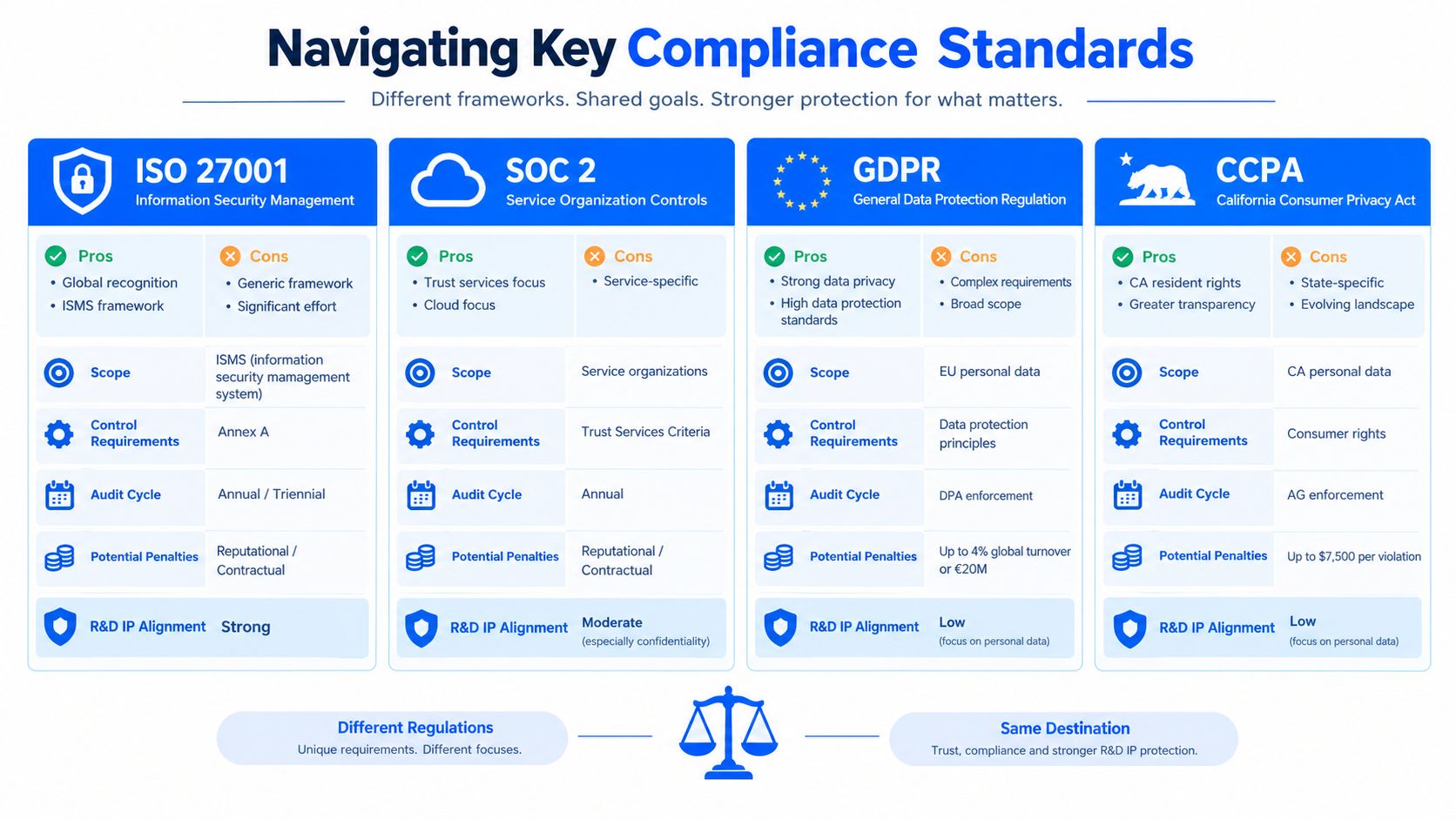
| Standard | Best fit | R&D relevance | Main limitation |
|---|---|---|---|
| ISO 27001 | Enterprise-wide security governance | Strong for IP, risk management, and control ownership | Requires sustained management-system effort |
| SOC 2 | Service providers handling customer information | Useful for confidentiality, access, monitoring, and vendor assurance | Scope depends on the service and selected criteria |
| GDPR | Personal data connected to people in the European Union | Important for employee, customer, participant, and contact records | It doesn't directly serve as an IP protection framework |
| CCPA | Personal data connected to California residents | Relevant to consumer and customer data workflows | State-specific obligations can evolve |
Framework selection should follow the data and business model. A manufacturer with globally distributed R&D may use ISO 27001 as its internal governance foundation, then require SOC 2 evidence from critical SaaS providers. GDPR or CCPA controls may apply to customer, employee, or research-participant information stored alongside technical records.
Map existing work to control objectives
Take ELN access management as a practical example. First, define the business purpose for each role. Next, document approval, provisioning, periodic review, revocation, and evidence of each action. Then connect those records to the relevant framework objective, such as access restriction, monitoring, data protection, or incident response.
This mapping prevents a common mistake: treating compliance as a separate paperwork exercise. The same access review can protect an unpublished formulation, support an ISO 27001 control, provide SOC 2 evidence, and reduce the chance of inappropriate access to personal data.
For teams preparing for a service-provider review, a visual SOC 2 compliance checklist can help organize evidence requests and identify missing owners.
Choose a practical path
Ask these questions before committing to a program:
- Business scope: Is the priority internal governance, customer assurance, personal data rights, or a combination?
- Data scope: Which systems contain IP, regulated information, or both?
- Evidence maturity: Can the organization demonstrate access reviews, change history, incident handling, and vendor oversight?
- Customer expectations: Do contracts require a particular certification or assurance report?
- Operating capacity: Can the security and R&D teams maintain policies, reviews, and corrective actions over time?
Compliance provides structure, but it doesn't replace judgment. A certified organization can still lose control of a poorly classified spreadsheet or an overprivileged service account.
Best Practices for Protecting R&D IP
R&D security starts with data discovery, not another firewall rule. Leaders need an inventory of formulations, experimental results, process parameters, supplier information, customer requirements, and supporting records. This inventory shows who owns each asset, which access rules apply, and whether an AI workflow is drawing on sensitive material.
A 2025 survey of 530 cybersecurity leaders found that only 27% said they could track more than 75% of their sensitive data, while 88% considered a metadata lake critical or very valuable for visibility, according to the 2025 Enterprise Data Security Confidence Index. For materials R&D, the consequence is practical. Fragmented spreadsheets, ELNs, and laboratory repositories make data governance and AI readiness one connected problem.
Create a governed metadata layer
A metadata lake can catalog datasets without requiring every team to replace its current system immediately. Useful fields include the owner, project, material family, sensitivity, retention requirement, source, approved users, downstream dependencies, and whether the data is approved for model development.
This layer gives security and R&D leaders a shared map. It can reveal duplicate exports, unknown repositories, unassigned data, and dependencies that affect policy decisions before a scientist sends information to a new service. Classification also needs to make sense to researchers. Labels such as public, internal, confidential, restricted IP, and regulated personal data work only when each label has a clear handling rule.
Reduce everyday loss paths
Controls should match laboratory work. Use dynamic access decisions in ELNs, limit exports by project and sensitivity, require approval for external sharing, and record downloads and permission changes. Encrypt laboratory exports, protect integration credentials, and remove access promptly when a project or employment relationship ends.
Proofpoint reports that 85% of organizations experienced a data loss incident in the past year, with careless insiders identified as the most common cause. The same report states that 1% of users were responsible for 76% of data loss events, as documented in its Data Security Report. These findings support behavior-aware controls. They do not justify treating every scientist as a threat. Good design makes the safe action easier than creating an uncontrolled copy.
For hybrid-cloud implementation guidance, security professionals can consult Cloudvara's important cloud security advice for professionals, then adapt those practices to instruments, ELNs, SaaS applications, and external research partners.
Polymerize provides a useful mapping for teams connecting traditional R&D controls to AI-native workflows. Preserve the same ownership, classification, permissions, and audit expectations when experimental data moves from a spreadsheet or ELN into a shared platform. The AI workflow should inherit governance rather than create a second, untracked repository.
A prioritized R&D action plan looks like this:
- Identify high-value IP and its owners.
- Discover repositories, exports, and integrations.
- Apply practical classifications and handling rules.
- Replace broad permissions with project and role-based policies.
- Monitor unusual access, downloads, and sharing.
- Test incident response using a realistic formulation-loss scenario.
- Confirm that approved AI workflows respect the same controls.
Applying Data Security in AI Native Platforms
A global materials company adopts an AI-native workflow after years of storing experimental data across spreadsheets, ELNs, and team repositories. The R&D leader wants scientists to search historical experiments and predict promising formulations, but the security architect sets a condition: the platform must preserve ownership, permissions, encryption, auditability, and traceability instead of creating a second uncontrolled data estate.
Polymerize can serve as one implementation option in that design. Its platform brings experimental information from fragmented sources into a centralized data backbone through Polymerize Connect, while role-based access and enterprise controls support separation between projects, teams, and environments. Polymerize states that its security posture includes ISO 27001 and SOC 2 controls, encryption, role-based access, and GDPR and CCPA compliance.
The architecture mapping is straightforward:
- Discovery and lineage: Polymerize Connect tracks how information enters and moves through the platform, helping teams connect source records with downstream analysis.
- Access control: Role-based workflows can limit who views, edits, approves, or exports sensitive formulation information.
- AI governance: Polymerize Labs provides explainable materials models, so scientists can examine drivers, confidence information, and historical precedents rather than receiving an opaque recommendation.
- Security operations: Activity records and platform events can feed the organization's broader monitoring and incident-response processes.
The important lesson isn't that an AI platform removes the need for enterprise security. It should fit into the existing program. Security teams still need to define classification, approve integrations, review permissions, monitor unusual behavior, and test response procedures. R&D leaders should also confirm how model inputs, outputs, and derived datasets are governed before enabling broad access.
Conclusion and Next Steps
Enterprise data security for R&D depends on connecting four disciplines: risk prioritization, layered architecture, compliance evidence, and practical IP protection. Encryption, access control, monitoring, lineage, and zero trust work best when they follow the actual path of experimental data rather than a simplified network diagram.
Start with a gap analysis of high-value formulations, ELNs, spreadsheets, cloud repositories, and AI integrations. Build a governed metadata layer, assign owners, tighten project permissions, and test incident response against a realistic data-loss scenario. Then evaluate AI-native security features that preserve lineage, explainability, and policy enforcement within the R&D workflow.
Generative AI will increase the value of clean, governed data, while zero trust will continue moving security decisions closer to each request and resource. Organizations that connect those trends to disciplined data stewardship can support faster discovery without treating innovation and protection as opposing goals.
Polymerize helps materials R&D teams unify experimental data, apply role-based and encrypted access controls, preserve data lineage, and use explainable AI workflows for more governed discovery. Visit Polymerize to explore how an AI-native data backbone can fit into your enterprise security program.
Put your R&D data to work
See how materials teams use Polymerize to plan fewer experiments and reach target properties faster.