

Materials Informatics
A deeper understanding of the Materials Informatics platform and the reasons why digitalization in the materials industry is the need of the hour.
What is Materials informatics?
Materials informatics is the intersection between materials science and artificial intelligence particularly focusing on developing new materials, predicting the functional properties, and optimizing the composition for accelerated innovation and product development.
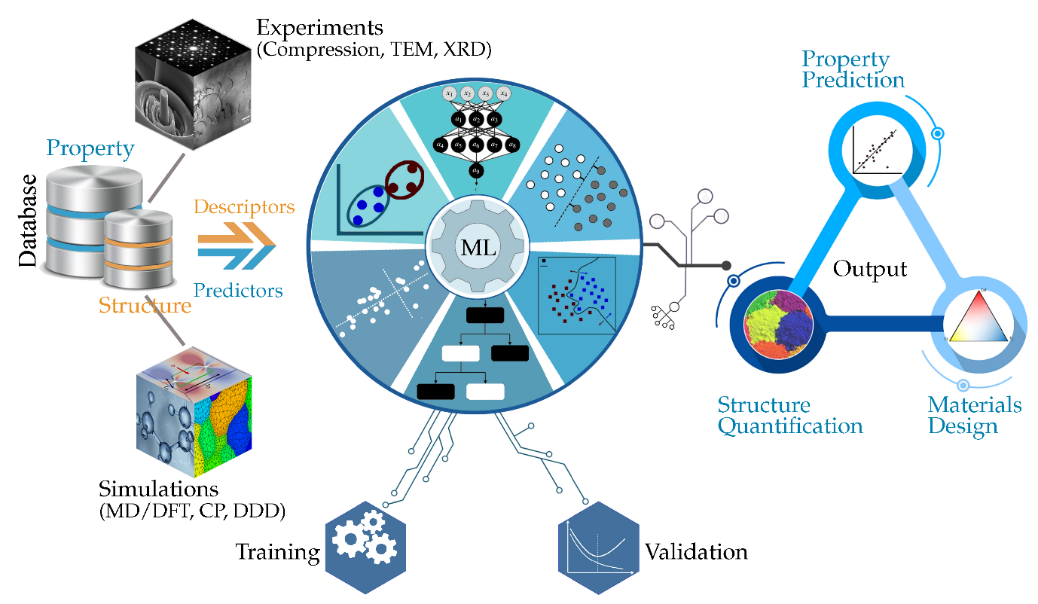
Materials are like human beings possessing very distinct characteristics/ features generated from their inherent structural attributes and fabrication conditions. Therefore, the performance and functional attributes of the materials such as mechanical performances, chemical behavior, thermal, and thermo-mechanical properties are difficult to forecast and require long-term experimental approaches. This conventional mode of the experimental approach is costly as well as time-consuming. Moreover, the process requires experience/expertise in performance evaluation/ characterization. In this regard, the materials informatics creates a platform to accelerate this process with the help of modern computing facilities such as artificial intelligence and machine learning to understand the nonlinearity between the product composition and performance attributes thereby accelerating the product development.
Polymer is a popular class of material that requires no introduction as it is largely involved in our daily usage. Therefore, bringing polymer science with materials informatics together as polymer informatics will open up a wider perspective for developing new materials with optimal composition and performance attributes offering a versatile range of functional applications.
Polymerize with domain-specific expertise in polymer informatics is determined to provide the solution for the accelerated innovation with an experienced team of young professionals led by Dr. Abhijit Salvekar and Mr. Kunal Sandeep.
How much data is needed for materials informatics?
The accuracy and acceptability of materials informatics are governed by the relevant data availability and reliability. Similarly, the performance of the AI/ML engine runs with the quality and quantity of available data set which is system-specific. However, the system nonlinearity and desired output variables demand adequate data filtering and selection of control factors (directly influencing the outcomes). In terms of determining the accuracy of the model, the utmost need is to understand the factors/ variables directly influencing the outcome therefore requires supreme expertise and understanding. With an experienced team of polymer scientists and engineers, Polymerize has successfully demonstrated the caliber to showcase its proficiency in data management and data filtering for developing the materials informatics platform successfully. Driven by the knowledge and experience of our employees, Polymerize has developed an opportunity to manage the available experimental data set from the customer's end and reuse it for future goals. This will not only reduce the tedious experimental exercise but also provide a thorough understanding of the domain, emphasizing the factors majorly influencing the outcomes.
ROI of materials informatics
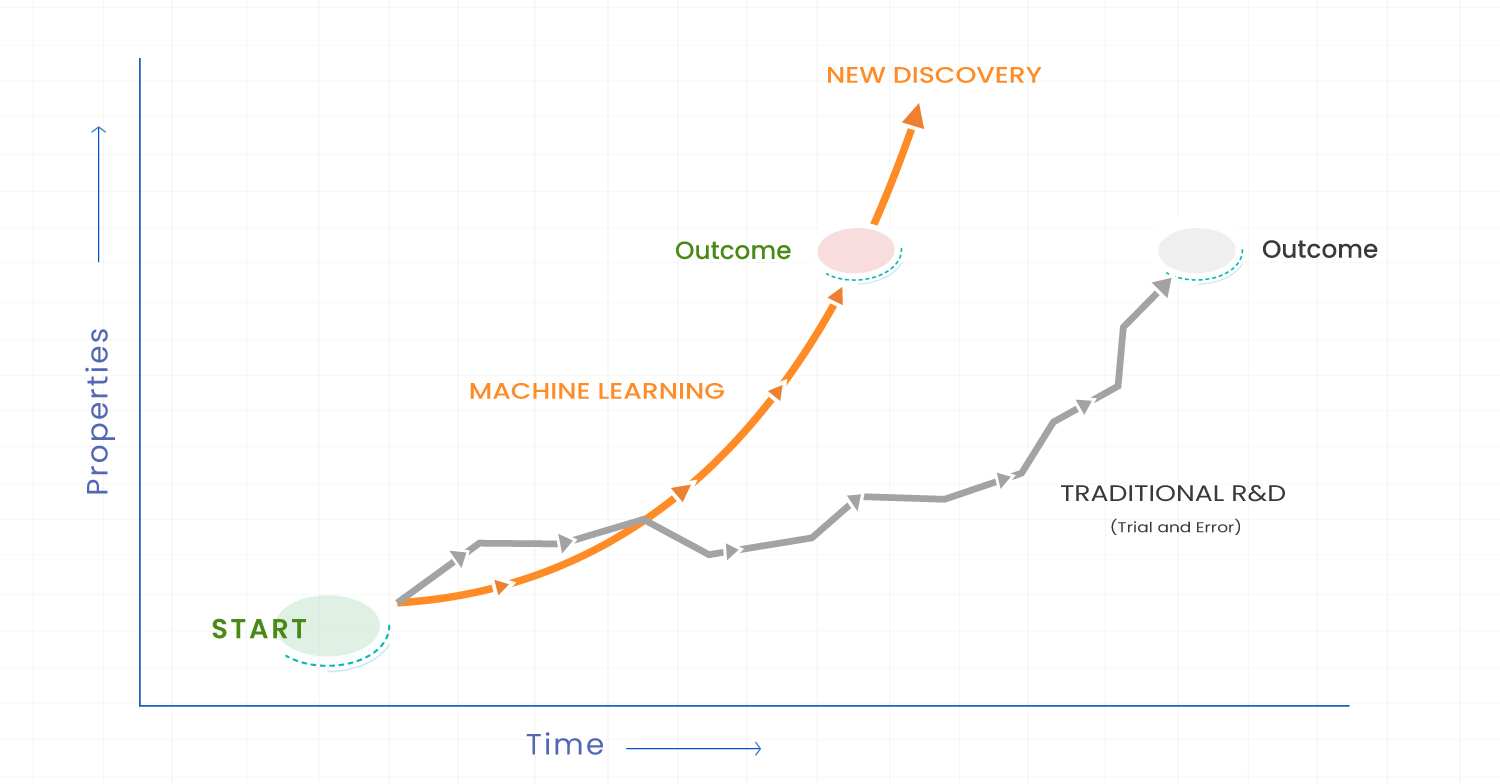
Return of investment (ROI), is the ratio between the investment benefit and the investment cost. Creating materials for the functional applications is time-consuming and required synthesizing chemicals and engaging an experienced workforce which will take several weeks/ months. On the flip side, AI requires only a few minutes to guide the researchers toward the most likely experiments to bring success. Therefore, the trial and error are replaced with a domain-specific data-driven path. The materials informatics platform from Polymerize guides the product formulation process based on the earlier dataset and suggests the most likely condition for reducing the uncertainty. Moreover, the suggested formulations are tested and the results are added to the platform for improving the desired accuracy of the model. Therefore, achieving high-performance adequate formulations quicker than the trial and error method. These are the advantages the materials informatics platform of Polymerize brings regarding the product development process.
- Reducing the number of experimental trials reduces initial investment costs.
- Extravagant reduction of time leads to fresh profits.
- Making processes robust, efficient and satisfying multiple objectives helps in the reduction of production costs.
- Optimization increases product value and brings out unseen discoveries.
- Codifying knowledge from experiments serves as a digital asset for future research.
Why digitalization in the materials industry is the need of the hour?
The material industry is conventionally guided by the expertise of the researchers. Therefore, developing new material formulation and optimal tuning of the functional performance attributes are the major challenge where the one variable at a time (OVAT) and design of experiment (DOE) approach has been usually followed to understand the impact of different influencing factors on the performance/ fabrication process. These experiments are time-consuming and require a lot of initial investment for the experimentation purpose thereby expected to be documented. Additionally, the enormous amount of data generated during multiple characterizations (such as mechanical, chemical, thermal, and thermo-mechanical) and functional performance evaluation, are unmanageable. Therefore, the Materials industry needs digitalization not only for managing the previous experimental data but also for using the earlier dataset in data feature extraction and understanding the primary influencing factors on the outcome.
Contextually, the Materials informatics platform by Polymerize would help to monitor the previous experiments in an organized way to classify/ manage the parameters (composition, fabrication process condition, etc.) and analyze the desired outcomes in terms of heat maps, pie-charts, and other interactive plots. Further, the dataset may be utilized in the next level for AI/ML to predict the desired formulation/ functional properties during product development/ process optimization.
Will AI replace scientists?
AI won't be replacing the knowledge and experience of the scientist rather it will act as a catalyst in creating a scope for the experienced researchers to find out the affecting parameters for the desired outcome, such as the influencing controllable variables that are directly responsible for the experimental results, analyzing the outcomes of materials informatics in scientific terms, guiding the materials informatics platform towards desired and contextually significant experimental dataset, etc. Therefore, the role of AI would be catalyzing material innovation without affecting the scientists’ job of understanding and analyzing the inherent characteristics of the materials.
The Materials ****informatics platform offered by Polymerize will guide the researchers to optimize the material properties based on the domain-specific knowledge, functional performances, and fabrication process by reducing the tedious trial and error method of repetitive experiments.
AI will very soon become an indispensable tool in Materials science and engineering for the scientist to accelerate innovation and product development.
Put your R&D data to work
See how materials teams use Polymerize to plan fewer experiments and reach target properties faster.